Research
Working paper · Version of 13 July 2026Structural Waste in Digital Operations
A Lean Theory of How the Weakest Layer Limits Capability
Mohammad Rashid Azarang Esfandiari · Mohammad Reza Azarang Esfandiari, Ph.D.
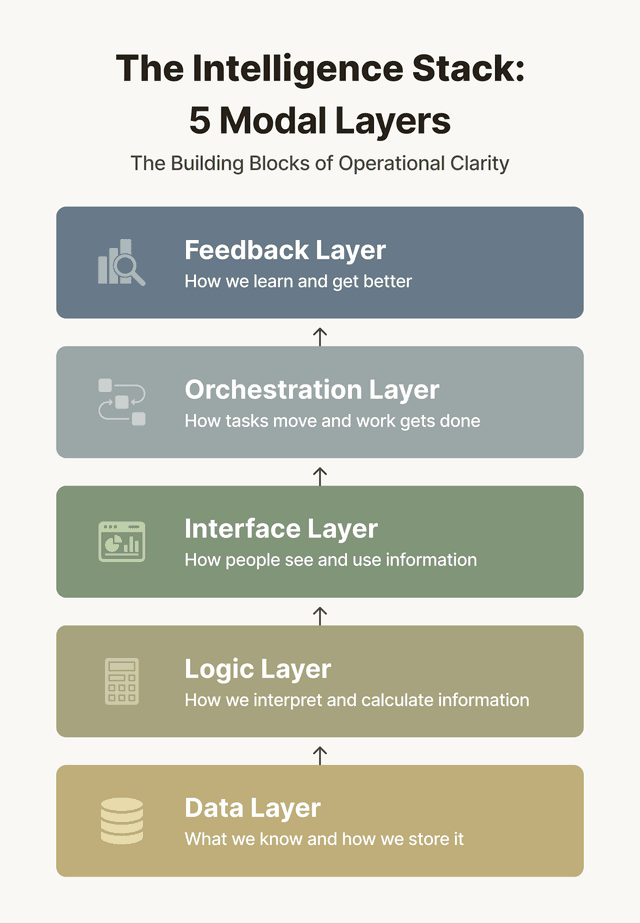
Develops a theory of structural waste — operational inefficiency from architectural misalignment, distinct from technical debt and process waste. Proposes a five-layer modal architecture (Data, Logic, Interface, Orchestration, Feedback), two measurement instruments (LSI and SWAT), and four propositions. The central claim, that capability is bounded by the least mature layer, is carried from analogy to a formal weakest-layer theorem to a pre-registered 500-repository study whose frozen criterion was not met — a decided null, reported in full.
Read paper →
Working papers
In preparation, not yet submitted. Listed here so the claim is on the record with its actual status rather than implied by a citation. Manuscripts are shared on request.
Working paper · 2026 · not yet submittedStrategic Technical Debt
A Real Options Approach to Early-Stage Software Experimentation
Prices deliberately incurred technical debt as a call option on the validated product: repayment is the strike, paid only on the survival branch, and abandonment is a costless default. Draws the boundary with a cost-loading test — debt whose cost lands on the success branch is strategic, debt that costs while merely held is toxic — and solves a finite-horizon program over belief and debt stock. Theory paper with a pre-registration-ready empirical program specified but not executed.
Working paper · 2026 · confirmatory result pendingAgent Harness: Deterministic Control for Probabilistic Systems
A five-plane decomposition and a conditional invariant-preservation result
Separates proposal authority from effect authority in an agent harness, then proves that under complete mediation of a declared effect boundary and a sound commit gate, every reachable protected state preserves the declared invariant — regardless of what the model proposes. The corollary is the useful part: model stochasticity stops mattering to the safety argument once proposals carry no independent commit authority. Study pre-registered before analyzer code was written.
Working paper · 2026 · preprint pending releaseThe Return Base Rate
Captured knowledge is almost never reused in a production AI-agent system
The agent-memory literature measures how well agents use prior context on evaluations where the answer-bearing memory is guaranteed present. This measures the step upstream: in a live system, does captured knowledge get surfaced and reused at all? Over an append-only, hash-chained ledger, return is effectively zero. Decomposes that into a funnel, localizes the stage the instrument could not previously see, and pre-registers the intervention.

